If you are asking, "How much does Energy Revolution System really cost?" or "How much can I save?" — this page gives you the straight numbers.
We break down the guide price, real-world parts costs, total first-build investment, realistic savings estimates, and payback timeline. No hype. No guaranteed outcomes. Just transparent math you can use to make an informed decision.
| Cost / Savings Item | Estimated Range | Notes |
|---|---|---|
| Digital guide price | $39–$49 | Discounted entry price is typically $39; standard price is $49. Optional upgrades may appear at checkout. |
| Parts & materials | $73–$210 | Varies by component quality, local store pricing, and whether you already own basic tools. |
| Total first build | ~$112–$259 | Guide + parts + any new tools. |
| Typical monthly savings | $20–$40 | Based on user-reported feedback for small-device supplementation. Not guaranteed. |
| Payback period | ~3–13 months | Depends on build quality, usage, and local electricity rates. |
| Money-back guarantee | 60 days | Applies to the digital guide through the official vendor. |
The total cost of getting started with the Energy Revolution System has three parts: the digital guide, optional checkout upgrades, and the physical parts you buy locally.
The core program is a digital package that includes video tutorials, PDF blueprints, a parts list, and written instructions. The guide is usually offered at a discounted entry price of $39. The standard price is $49. Because it is a digital product, there is no shipping cost.
During checkout, you may see optional one-time-offer (OTO) upgrades such as advanced build variations, additional video modules, or priority support. These are not required to build the base generator. Only add them if they fit your goals and budget.
The build uses common hardware-store parts: magnets, copper wire, PVC piping, a small inverter, connectors, and basic tools. Depending on the quality of components in your area and what you already own, expect to spend between $73 and $210.
Bottom line: A realistic first-build budget is $112 to $259 (guide + parts + any missing tools). That is a fraction of the cost of professional solar or a whole-home generator.
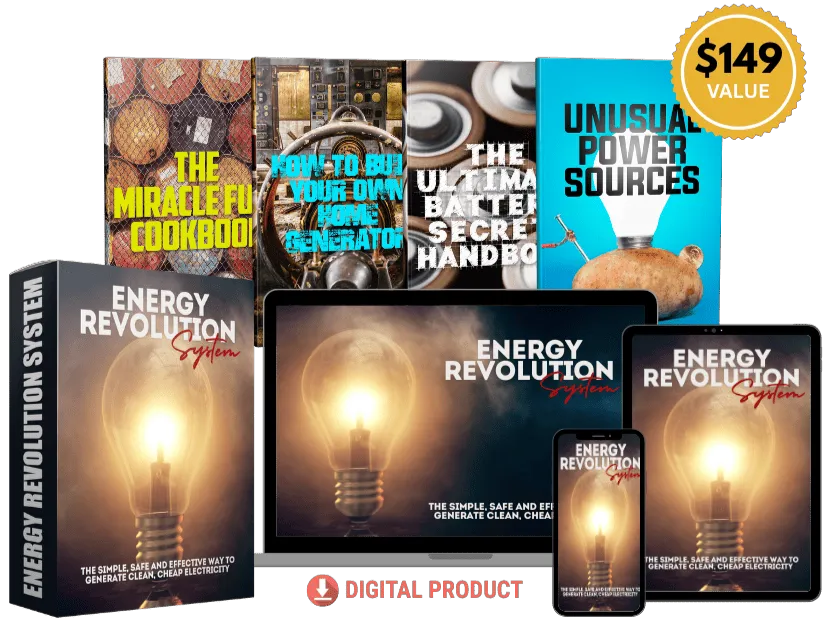
Beginner-friendly videos that show every build stage. Pause, rewind, and follow at your own pace.
Downloadable schematics with wire routing, component placement, and safety notes.
Exact specifications so you can walk into a hardware store and buy only what you need.
Important precautions for handling magnets, wiring, and small inverters safely.
A short list of basic hand tools. Most households already own the majority.
Email support for order and access issues through the official vendor platform.
Below is a realistic estimate of what each category costs at a typical hardware or electronics store in 2026. Prices vary by location and quality.
| Part Category | What You’re Buying | Est. Cost |
|---|---|---|
| Magnets | Neodymium magnets for rotor / stator assembly | $15–$35 |
| Copper wire | Magnet wire for coils (gauge depends on design) | $12–$30 |
| PVC piping & hardware | Housing, brackets, screws, and fasteners | $18–$45 |
| Small inverter | Low-wattage inverter to convert output for devices | $20–$60 |
| Basic tools | Screwdrivers, wire stripper, pliers, multimeter | $0–$30 if you already own them |
| Misc connectors | Terminal blocks, alligator clips, heat shrink, tape | $8–$20 |
| Total estimated parts range | $73–$220 | |
The program provides exact specifications. Buy only what matches the blueprint to avoid waste.
These numbers are illustrative. They are based on user-reported feedback from people who used the generator to supplement small-device usage, not to power an entire home.
| Monthly Bill Before | Est. Bill After Supplement | Monthly Savings | Payback Period |
|---|---|---|---|
| $150 | $130 | $20/month | ~6–13 months |
| $200 | $170 | $30/month | ~4–9 months |
| $250 | $210 | $40/month | ~3–7 months |
Disclaimer: These are illustrative estimates based on user-reported feedback. Actual savings depend on build quality, usage, and local electricity rates. The Energy Revolution System is intended to power small devices only and is not a whole-home energy solution.
How does the Energy Revolution System stack up against two popular alternatives? Here is an honest side-by-side comparison.
| Factor | Energy Revolution System | Solar Panels (Professional) | Gas Generator |
|---|---|---|---|
| Upfront cost | $112–$259 | $10,000–$25,000+ | $500–$2,000+ |
| Installation | DIY, no permits | Professional, permits required | Usually plug-and-play |
| Fuel / input cost | None | None after install | Gasoline / propane ongoing |
| Maintenance | Minimal | Low (occasional cleaning) | Engine maintenance, oil changes |
| Power output | Small devices only | Whole home possible | Moderate to high |
| Noise / emissions | Low noise, no exhaust | Silent, no exhaust | Loud, produces fumes |
| Best for | Budget-conscious supplemental power | Long-term whole-home savings | High-wattage backup during outages |
The honest answer: it depends on your goals.
Our take: For under $260 all-in, the Energy Revolution System is a low-risk educational project that can also offset small-device electricity costs. It is not a replacement for solar or a whole-home generator, but it occupies a unique budget-friendly niche.
Download the Energy Revolution System guide today and see exactly what to buy, where to connect it, and how to start saving.
Check Current $39 Offer60-Day Money-Back Guarantee | Guide Only: $39–$49
Vendor Disclaimer: The Energy Revolution System is an experimental DIY project intended for educational purposes. Results are not guaranteed. It powers small devices only and is not a whole-home energy solution. Always follow the included safety guidelines and consult a qualified professional before integrating any DIY generator with household wiring.
Download the guide, gather the parts, and see how quickly you can offset your small-device electricity costs.
Get the Guide — $39–$4960-Day Money-Back Guarantee